
Havn.ai blog
What to Do in the First 24 Hours After a Fire
November 3, 2026 · Havn.ai
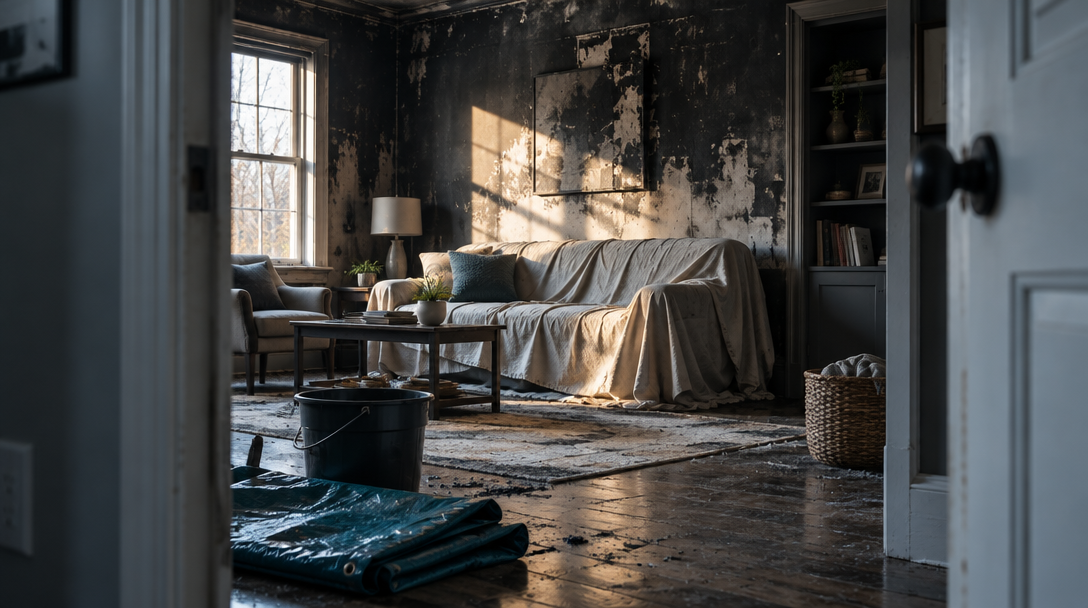
The fire is out. The street is quiet, the trucks are leaving, and you are standing outside your own house holding a phone with a dead battery.
The first day is not about paperwork. It is about safety, a place to sleep, and taking the few steps that keep the claim from getting harder later. Here is the order that helps.
Before anything else: do not go back in
A fire leaves hazards that outlast the flames: weakened floors and roof, live wiring, gas, and air that is not safe to breathe. Soot and ash are not just dirt; fine particles travel through the whole house and settle inside cabinets and ducts.
- Wait for the fire department to confirm the building is safe to enter, and ask them to tell you which parts are not.
- Do not switch on lights or use appliances until the electrical system has been checked.
- Do not run the heating or cooling system. It can pull soot through the house.
- Keep children and pets away from the property, and wash hands after any contact with ash.
If you are told the house is not habitable, that decision is the start of a loss of use, or additional living expenses, part of your claim. Tell your insurer early, in writing.
Call your insurer the same day
Report the loss promptly and open the claim. You do not need a complete inventory to make the call. You need the policy number, the address, the date and time of the fire, and a way to be reached.
Ask three questions while you are on the phone:
- Who is my adjuster, and when will they contact me?
- What should I do about securing the property tonight?
- How do I get temporary housing approved, and what will you need from me?
Write down the name of everyone you speak to, the time, and what they said they would do next.
Secure the property, and keep the receipts
An open roof or a broken window after a fire invites water damage and theft, and your policy generally expects you to prevent further damage. Board-up and tarping usually count as covered emergency work.
Your insurer may send a vendor, or ask you to arrange it. Either way, keep the invoice, take photographs before and after, and do not sign anything that assigns your claim rights to a contractor. If someone knocks on your door that night offering to handle everything, take their card and wait.
Photograph before anyone cleans
The instinct is to start clearing. Resist it for one hour and photograph first.
- Take a slow video walking the outside, then the inside, narrating the date, the time and each room.
- Shoot wide, then close, then with something for scale.
- Photograph the room of origin, the path the smoke travelled, and the water damage from firefighting.
- Photograph what is left of damaged contents in place, before they move.
That water is part of the same claim. Firefighting saves the structure and soaks the rest of it, and both belong in the record.
Do not throw things away yet
Smoke-damaged items can look finished and still be restorable, and an adjuster may need to see them where they sit. Ask before anything leaves the house. If something must go for health reasons, photograph and list it first, and write down the date it was removed and why.
Keep the small receipts from the first week
In the first days you will buy things you did not plan for: clothes, medications, toiletries, phone chargers, pet food, school supplies, a lock for the front door. Where your policy includes loss of use or additional living expenses, these can be recoverable. Coverage and limits vary, so ask your adjuster what is included rather than assuming.
One envelope, or one folder on your phone, for everything. Photograph each receipt the day you get it, because thermal paper fades.
Put the calls in one place
For the next month you will speak to an adjuster, a contractor, a mortgage company, maybe a restoration crew and your agent. Keep a single log: date, time, who, what was said, what happens next. Confirm anything important by email afterwards. A dated note is what carries weight when details are remembered differently later.
Choose contractors carefully
- Get itemised written estimates from more than one contractor where you can.
- Ask for a licence and proof of insurance.
- Read anything called an assignment of benefits before you sign it. It can hand your claim decisions to someone else.
- Be wary of anyone who offers to handle the whole claim for you, or who asks you to inflate the scope.
- Do not pay in full up front.
The scope of work, in writing, is what your adjuster and your contractor need to agree on.
The first week, in order
- Confirm the property is safe to enter, and secure it.
- Report the claim and get your adjuster's details.
- Photograph and video everything before cleanup.
- Arrange temporary housing and tell your insurer in writing.
- Gather the paper trail: policy, receipts, estimates, letters, call log.
- Get one itemised estimate, then a second if you can.
- Keep a running contents list with age, cost and condition.
Where Havn.ai fits
Havn.ai is built for the week you are in now. You upload your policy, receipts, contractor estimates and adjuster letters, and it reads them, explains what your policy says in plain language, and turns the pile into an organised claim with a report you can hand to your adjuster.
It never invents a policy term. It does not file your claim or negotiate for you, and it is not a substitute for emergency services, your adjuster or legal advice. If the house is unsafe or anyone is injured, call the professionals first.
FAQ
Should I stay in the house after a small fire? Only if the fire department says it is safe and the utilities have been checked. Smoke residue affects air quality even where there is no visible damage.
Will my policy pay for a hotel tonight? If the home is not habitable and your policy includes loss of use or additional living expenses, temporary housing is often covered, subject to limits. Call your insurer and confirm, then keep every receipt.
Do I have to clean up before the adjuster arrives? No. Secure the property and prevent further damage. Document the condition first, and keep damaged items until you are told otherwise.
Is water damage from the fire hoses covered? It is usually part of the same fire loss, since it resulted from fighting the fire. Photograph it and include it in your claim.
Someone offered to handle my claim for me. Should I sign? Read it first, and ask your insurer or a lawyer about anything that assigns your rights. You can gather your own documents without giving up control of the claim.
This article is general information, not insurance or legal advice. Your policy wording and your adjuster's instructions come first.
This is general information, not legal or insurance advice. Every policy is different, and only your own policy and your state's rules decide your claim. For advice, talk to your adjuster, a licensed public adjuster, or an attorney.