
Havn.ai blog
Storm Damage Claims: Wind, Hail and What Comes Next
November 3, 2026 · Havn.ai
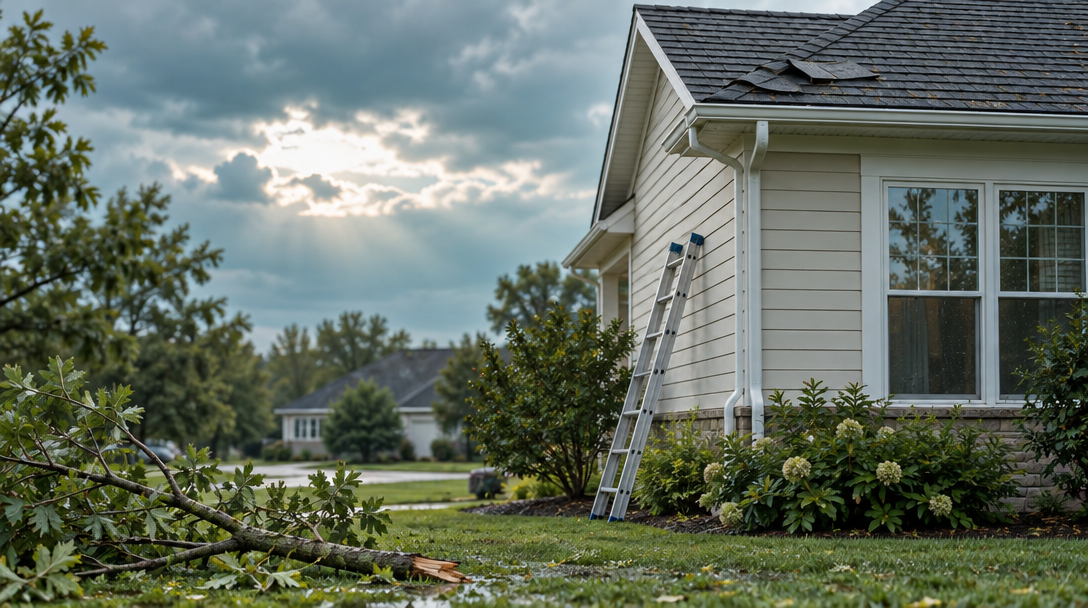
A storm claim is a volume claim. Your neighbourhood files dozens in the same week, which changes what good handling looks like: report early, document clearly, and be ready for the questions an adjuster will ask every homeowner on your street.
Here is what a wind or hail claim usually involves, and where the arguments come from.
Start with the cause of loss
Before anything else, agree on what happened. Three causes get confused after a storm:
- Wind, which lifts shingles, removes siding and opens the envelope of the house
- Hail, which bruises shingles and dents soft metals
- Water, which comes in two very different forms: rain entering through an opening the wind created, or rising and surface water
Rain entering through a wind-created opening is usually part of the homeowners claim. Rising water and surface flooding are usually a separate flood policy. If your damage is mixed, say so clearly and keep the two parts of the record distinct. Mixing them is the fastest way to slow a claim down.
Check your deductible before you file
Storm claims frequently carry a different deductible: a percentage deductible for wind, hail or a named storm, calculated against a limit rather than against the damage.
Find out which deductible applies to your cause of loss, and what it is calculated on, before you decide what to claim. On a large limit, it can change the arithmetic substantially.
Document before anyone repairs
Repairs start fast after a storm, often before an adjuster arrives. What you record in the first two days is what the claim will be built on.
- Photograph wide shots of each elevation of the house, then close shots of the damage
- Photograph the ground: shingle granules, hail marks on soft metals, fallen debris
- Photograph interior water intrusion, with something for scale and a moisture reading if you have one
- Keep the fallen branch, or photograph it where it fell, before it is cleared
- Note the date and time of the storm, and keep any weather report or alert you received
Do not climb onto the roof. Wet shingles and steep pitches cause injuries, and a fall creates a second, worse problem. Use what you can see from the ground, a window, or a safe ladder position, and tell the adjuster what was not safely accessible.
Protect the property and keep the invoices
Tarping a damaged roof and boarding a broken window are usually treated as covered emergency work, because your policy expects you to prevent further damage. Keep the invoice, photograph the before and after, and tell your adjuster what was done.
If you cannot get a tarp up immediately, document what you did instead: buckets, moved furniture, a written note of the timing. Secondary damage from a known unrepaired opening is where claims get reduced.
The roof argument, specifically
Most storm disputes end up being about the roof. The questions are predictable:
- Repair or replace? The answer turns on the extent and pattern of the damage, not on the age alone.
- Was the damage from this storm or from age? Granule loss, curling and cracking are signs of age; bruising and fresh mat damage are signs of hail.
- Does the repair match the rest of the roof? Where a repair leaves a visibly mismatched surface, matching can become part of the conversation, depending on your policy and your state's rules.
- What about code-required upgrades? Ordinance or law coverage, if you have it, is the part that pays for rebuilding to current code rather than to the old standard.
- What is the depreciation? Roofs are often settled on an actual cash value basis first, with the holdback paid after replacement.
Ask for the roof report and the pricing basis in writing. If your contractor disagrees with it, ask them to respond item by item, with photographs, rather than with a general objection.
Be careful who you sign with
After a large storm, out-of-area crews arrive quickly. Some are excellent. Some are not, and the paperwork they hand you is the risk.
- Read anything called an assignment of benefits, and understand that it can transfer decisions about your claim
- Do not sign a contract with a blank scope or a price to be determined later
- Ask for a licence, insurance and local references
- Get itemised estimates, and more than one where you can
- Do not pay the full contract up front
- Never accept an offer to "handle the insurance side for you" in exchange for the job
Common reasons storm claims are reduced or denied
- Maintenance and age, where the damage developed before the storm
- Flood versus wind, where the recorded cause of loss does not match the damage
- No direct physical loss, where intrusion is claimed without a visible opening or evidence
- Late reporting, where secondary damage went untreated for weeks
- Missing documentation for interior contents and finishes
Each of these is answered with the same three things: a clear timeline, dated photographs, and written reports from people who inspected the property.
A realistic timeline
A straightforward wind claim can move in weeks. A disputed roof or a mixed wind-and-water claim can take months, especially after a wide event when adjusters are working through hundreds of files. Expect an inspection, an estimate, negotiation over scope, a first payment, repairs, and then a holdback claim with your invoices.
Keep the file live. A polite written follow-up every two weeks, referring to specific items still open, does more than a frustrated phone call.
Where Havn.ai fits
Havn.ai reads your policy, contractor estimates, adjuster reports and receipts, and turns them into one organised claim: what is covered, what each document says, and where the numbers disagree. You get a report you can hand to your adjuster and a record of every conversation.
It reads only what you upload and never invents a policy term or a finding. It does not file, negotiate or inspect. Your policy and your adjuster's instructions come first.
FAQ
Is storm damage always covered? Wind and hail damage is commonly covered, subject to your deductible and exclusions. Flood and surface water are usually excluded and need a separate policy.
Should I file before I have a contractor estimate? Report the loss promptly and tell your adjuster documentation is coming. You do not need a full estimate to open the claim, and delay creates its own problems.
Can I choose my own contractor? Generally yes, and you should be cautious about anyone who tells you otherwise. Your insurer may ask for an itemised estimate and photographs of the work.
What if my roof is old? Age affects depreciation and may support a maintenance argument, but it does not by itself remove coverage for damage caused by a covered storm event.
What if I have already repaired the roof? You can still claim, with the invoices, photographs from before the repair and the contractor's written scope. Say plainly what was replaced and when.
This article is general information, not insurance or legal advice. Your own policy wording and your adjuster's instructions come first.
This is general information, not legal or insurance advice. Every policy is different, and only your own policy and your state's rules decide your claim. For advice, talk to your adjuster, a licensed public adjuster, or an attorney.