
Havn.ai blog
How to Document a Water Damage Claim: A Step-by-Step Checklist
November 3, 2026 · Havn.ai
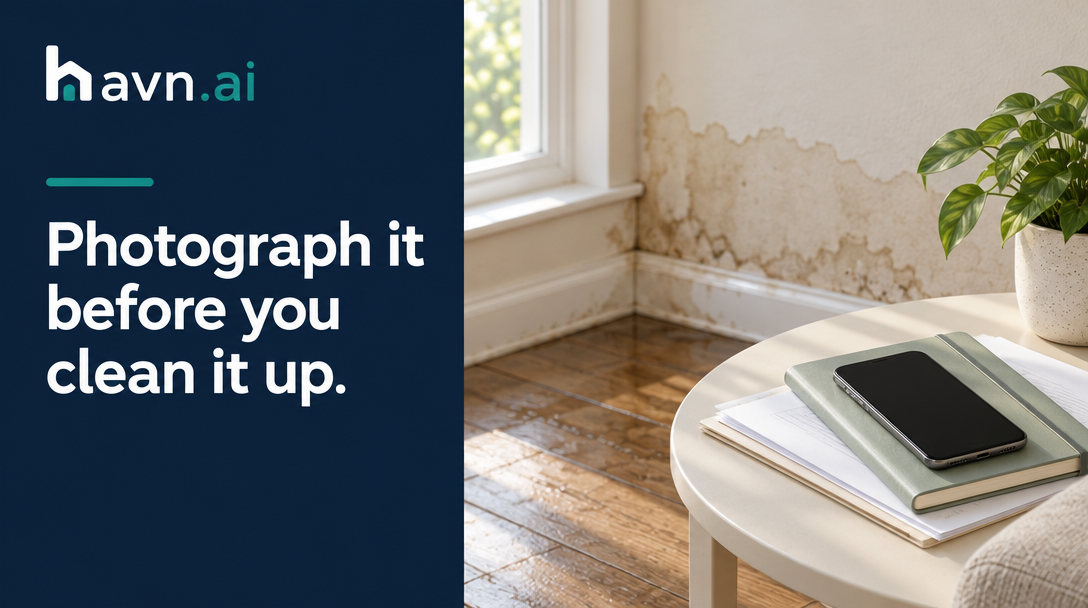
Water in the house is a bad day. Then comes the part that decides whether your insurance claim covers it: the record you build in the next 48 hours.
Your adjuster was not standing in your kitchen at 2 a.m. They will not see the water line on the drywall or the box of photographs that got soaked. What they see is whatever you can show them. This guide walks through documenting water damage in the order that matters, from the first photo to the report you hand over.
Why documentation decides your claim
A claim is an argument made of evidence. The policy says what is covered. Your photos, receipts and estimates show what actually happened and what it costs to fix.
Three habits do most of the work:
- Document before you clean, not after. Once the wet carpet is at the curb, it is hard to prove how deep the water sat or how much flooring needs replacing.
- Keep the originals. Send copies to your insurer. Keep every original receipt, letter and invoice in one place.
- Write down dates. Memory drifts under stress. The order of events matters when your claim is reviewed months later.
Before you clean up: the 30-minute walkthrough
Take this pass before anyone starts pulling up flooring. If a room is unsafe, or the damage came from a fire or structural failure, document it from the doorway and let your insurer or a professional handle entry.
- Walk the whole path the water traveled. From the source, along the walls, under the floors, into the room below. Water rarely stays where it first appears.
- Take video first, then photos. A single slow video with you narrating the date, the time and what you are looking at is the most useful file in your claim.
- Shoot wide, then close, then with scale. A wide shot shows the room. A close shot shows the damage detail. A shot with a tape measure, a coin or a shoe shows size.
- Photograph the source. The failed supply line, the cracked pipe, the missing shingles, the blocked drain. Where the water came from shapes how the claim is handled.
- Record the readings and the equipment. If a mitigation crew has already placed fans, dehumidifiers or a moisture meter, photograph the readings and the setup as it stands.
- Note the standing water depth. A ruler in the photo, or a written note taken at the same time, settles the argument later.
What to record room by room
Contents claims are where homeowners most often leave money on the table, because the record is vague.
For each damaged item, write down:
- What it is, with brand and model if you can still read them
- Roughly how old it is and where you bought it
- What you paid, if you know or can find the receipt
- Its condition before the damage
- A photograph of it in place, and a second photograph after you group similar items together
Do not throw damaged items away just because they are ruined. Photograph them first, and check with your adjuster before anything leaves the house. If a sample matters, such as a piece of flooring or a cabinet door, keep it where it is safe.
Keep the paper trail
Paperwork is half the claim. Gather it as you go, rather than in a panic at the end.
- Your policy. The declarations page, any endorsements, and the exclusions section. Read what your policy says about water, seepage and gradual damage.
- Receipts for mitigation costs. Fan and dehumidifier rental, water extraction, hotel nights, laundry, and meals if your coverage includes them.
- Contractor estimates. At least one written, itemized estimate. Two or three are stronger.
- Every adjuster letter and email. Keep the envelope date, the email date, and the full text.
- A call log. Date, time, who you spoke with, and what they said they would do next.
- Lender details, if your mortgage company is named on the claim check.
Organize it so the adjuster can follow it
Adjusters read dozens of claims a week. A record they can follow quickly is a record they can act on.
- One timeline. Every event in date order, from the leak to the last contractor visit.
- One contents schedule. A simple table of damaged items with age, cost and receipt reference.
- Files named by room and date. No folder called "misc."
- Totals that match the receipts. If your summary says $4,200, the receipts behind it should add up.
- A one-page cover summary. What happened, when, what you are claiming, and what is attached.
Three gaps that cost homeowners money
- No evidence of what was there before the cleanup. The single most common gap, and the hardest to fix later.
- Missing receipts for the small costs. Temporary housing, meals, dumpster rental and laundry add up, and they are easy to forget.
- Undocumented adjuster conversations. If you cannot show what was agreed on a call, it is your word against a note.
Where Havn.ai fits
Havn.ai is a claims assistant for homeowners. You upload your policy, receipts, estimates and adjuster letters. It reads them, explains what your policy says in plain language, and turns the pile into an organized claim with a PDF report you can hand to your adjuster.
It never invents a policy term. If a detail is not in your documents, it does not make one up. That matters when the report is going to a professional who will check it.
Havn.ai does not file your claim or negotiate for you. It gets your evidence into a shape an adjuster can act on. This article is general information, not insurance or legal advice. Your policy and your adjuster's instructions come first.
Water damage claim documentation checklist
- Video walkthrough with spoken date, time and room names
- Wide, close and scale photos of every affected area
- Photos of the source of the water
- Item-level contents list with age, cost and condition
- Photos of damaged items in place, before disposal
- Policy declarations page, endorsements and exclusions
- Receipts for mitigation, lodging and temporary costs
- One to three itemized contractor estimates
- Every adjuster letter, email and call logged by date
- A one-page summary with totals that match
FAQ
How soon should I document water damage? Before cleanup starts, and ideally within the first day. Take the walkthrough video as soon as it is safe to be in the rooms, then add detail as you go.
Should I throw away damaged items? Photograph and list them first, and ask your adjuster before anything leaves the house. Items that pose a health risk should be handled with the guidance of a professional.
Do phone photos count as evidence? Yes. Keep the original files rather than screenshots or messaging-app copies, so the dates and details stay intact.
What if I already cleaned up? Document what remains, gather the receipts from the cleanup, and tell your adjuster plainly which items were removed and when. Do not rebuild the record from guesswork.
Does Havn.ai file the claim for me? No. Havn.ai reads your documents, explains your coverage in plain language and produces a report you can share. You and your adjuster decide what is submitted.
This is general information, not legal or insurance advice. Every policy is different, and only your own policy and your state's rules decide your claim. For advice, talk to your adjuster, a licensed public adjuster, or an attorney.