
Havn.ai blog
Burst Pipes in Winter: What to Do Before the Damage Spreads
November 4, 2026 · Havn.ai
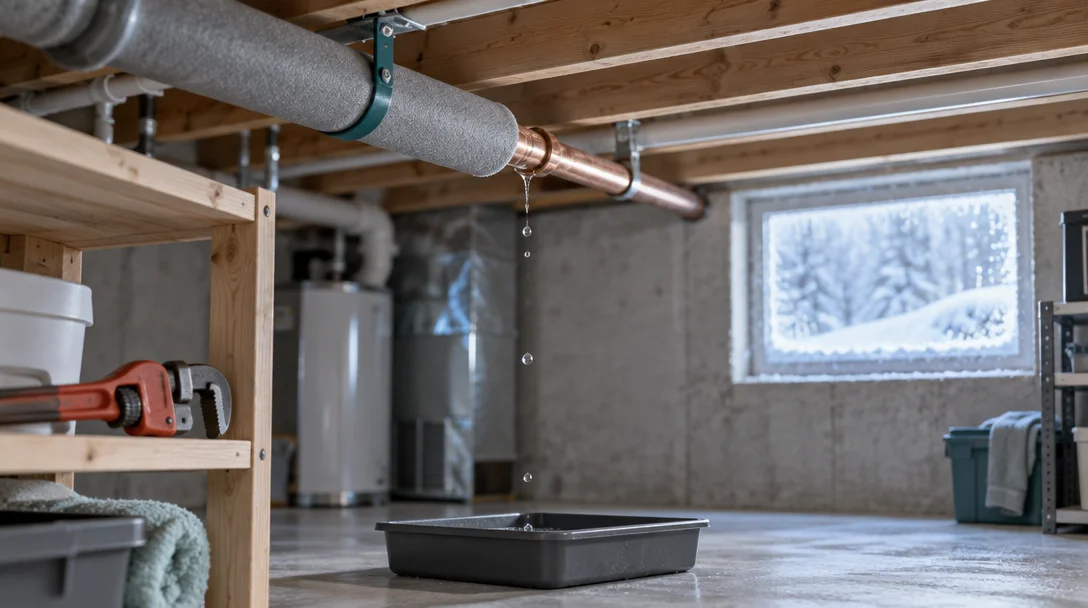
A pipe bursts at the worst possible moment: a cold snap, a holiday, a night when everyone is asleep. The first hour decides how much of your home gets wet, and how much of the damage your policy covers. Here is the order that matters.
Shut the water off before anything else
Water is still moving until you stop it. Find your main shutoff valve and turn it clockwise until it stops. In most houses it sits near the water meter, in a basement, utility closet, or crawlspace. If you have a valve at the street, you may need a meter key.
If you cannot find it, call your water utility and ask them to shut it off at the meter. Do that even at night. Every minute the line stays open adds water to floors, ceilings, and wall cavities.
Once the supply is off, open a low faucet to drain what is left in the lines.
Then deal with electricity, carefully
Water and live circuits do not mix. If water is near outlets, a panel, or ceiling fixtures, do not walk through it in bare feet and do not flip breakers yourself. Call an electrician. If water is nowhere near the electrical system, shut off the circuit for the affected area before you start moving things.
Start the claim the same day
Call your insurer or open the claim in their app the day it happens. You do not need an estimate or a complete list to start. What you need is a claim number and a record that you reported it promptly.
Ask two questions while you have someone on the phone:
- Is a water mitigation company required, or may I choose my own?
- Do I need approval before emergency repairs, and what counts as an emergency?
Write down the date, time, and the name of whoever you spoke with.
Photograph before you clean
This is the step most homeowners skip, and it is the one that costs money later. Before towels, before the wet vac, before anything gets carried out, take photos:
- A wide shot of each affected room from the doorway, showing the whole space.
- Mid-range shots of the water line on walls, the wet flooring, and swollen baseboards.
- Close-ups of the failed pipe or fitting, with something for scale.
- Photos of any belongings that are wet or ruined, on the floor where you found them.
Take a short video walking through the rooms and narrating what you see. It takes ninety seconds and settles a lot of arguments later.
Keep the broken part
Save the section of pipe or the failed fitting that let go. Put it in a bag and keep it. Adjusters and contractors use the failure point to tell a burst from a slow leak, and that distinction changes how a claim is read. Do not let it go out with the trash.
Stop the water from traveling
Water moves through floors and ceiling cavities long after the source is shut off. Move furniture and rugs off wet flooring. Lift boxes and electronics onto dry surfaces. Get wet carpet and padding out if the insurer or mitigation crew tells you to.
If the ceiling is bulging, stay out of the room and call a professional. A sagging ceiling can come down.
Call a mitigation company, and read the bill
Most policies cover reasonable steps to prevent further damage, often under a separate line for water mitigation. That work is different from repairs: it is drying, extraction, and demolition of wet materials. It is also the invoice homeowners question most.
Ask the crew to photograph moisture readings before and after, and to explain anything they plan to remove. Keep every invoice and every signed authorization.
Watch the freezing clause
Most policies cover a sudden burst, but many also carry a freezing exclusion with exceptions attached. The usual language requires that you either maintained heat in the home or shut off the water supply and drained the pipes before leaving it empty. If the house sat unheated for a week and a pipe split, expect questions.
Be ready to show your thermostat records, your utility bills, or the fact that a neighbor checked the house. Honest documentation is the difference between a covered burst and a denial.
Mold starts the clock
Mold can begin growing in wet materials within a couple of days. Drying the structure promptly is part of your duty to limit further damage. It is also the reason insurers expect mitigation to start quickly. If a crew cannot get there today, ask your insurer what interim steps they will accept.
If you have to move out
If the damage makes the home unsafe to live in, ask about additional living expenses. Keep every hotel receipt, meal receipt, and mileage record while you are displaced. Those costs are usually part of the claim, but they are only paid if you can show them.
Where homeowners get into trouble
Most of the disputes we see come down to four things:
- No photos of the water before cleanup started.
- No record of when the loss happened and when it was reported.
- A freezing exclusion triggered by a house that sat cold and empty.
- A mitigation bill with no readings, no photos, and no explanation.
Each of those is fixable in advance with a phone camera and a few habits.
Keep the file in one place
A burst pipe claim produces a policy, a mitigation report, contractor estimates, receipts, and a string of emails from an adjuster. Havn.ai reads those documents, explains what your policy says about water damage and freezing, and turns the whole set into one organized report you can hand to your adjuster.
You handle the pipe and the drying. Keep the paperwork in one place, and you will spend far less time arguing about it later.
This is general information, not legal or insurance advice. Every policy is different, and only your own policy and your state's rules decide your claim. For advice, talk to your adjuster, a licensed public adjuster, or an attorney.